


An office refresh before year end is a planned improvement of an existing workspace to make it more functional, comfortable, organised, and visually appealing before the new business year begins. It may involve updating office furniture, improving lighting, reorganising layouts, refreshing wall finishes, upgrading meeting areas, and introducing better storage solutions. Unlike a complete renovation, an office refresh can focus on selected improvements that create a noticeable difference without necessarily changing the entire workspace.
As the year comes to an end, businesses have a useful opportunity to review how their offices support everyday operations. Perhaps employees need more comfortable workstations, meeting rooms feel outdated, or shared areas have gradually become cluttered. These small issues can affect the overall working environment over time. Planning an office refresh before year end allows businesses to address these concerns, create a more welcoming atmosphere, and prepare their teams for the year ahead.
Why Should Businesses Plan an Office Refresh Before Year End?
An office is more than a place where employees complete their daily tasks. It represents the company’s identity, supports collaboration, and influences how employees and visitors experience the business.
Over time, furniture becomes worn, storage areas become crowded, and office layouts may no longer reflect changing business needs. A workspace that once felt comfortable may become less practical as teams grow or working arrangements change.
An office refresh provides an opportunity to review these areas before another busy business year begins.
Here are several reasons why businesses should consider refreshing their offices:
- Improve workplace functionality: Reorganising furniture and work areas can make everyday activities more convenient.
- Create a welcoming environment: Updated colours, finishes, and furnishings can give the office a more professional appearance.
- Support employee comfort: Better lighting, ergonomic furniture, and thoughtful layouts can improve the working experience.
- Reflect business growth: An updated workspace can accommodate new employees, equipment, and operational requirements.
- Strengthen brand identity: Interior design choices can communicate a company’s values, personality, and professionalism.
A well-planned refresh does not always require major construction. Sometimes, a few carefully selected improvements can make an existing office feel more organised and enjoyable.
8 Smart Ways to Refresh Your Office Before the Year Ends
An effective office refresh starts with identifying what needs improvement. Rather than changing everything at once, businesses should prioritise upgrades that provide practical value.
1. Review Your Existing Office Layout
Start by looking at how employees currently use the office. Walk through the workspace and identify areas where movement feels restricted, furniture takes up unnecessary space, or departments struggle to collaborate.
For example, a meeting table may occupy an area that could be used more effectively, while frequently accessed storage may be located too far from employees.
Consider these layout improvements:
- Arrange desks to maintain comfortable walking routes.
- Keep frequently used equipment accessible.
- Separate quiet working areas from collaborative spaces.
- Create clear pathways between workstations and shared facilities.
- Review whether meeting rooms have enough seating and suitable equipment.
The goal is to create a layout that supports daily operations without making the office feel overcrowded.
Businesses looking for additional planning inspiration can explore practical ideas on how to maximise office space.
2. Upgrade Office Furniture and Workstations
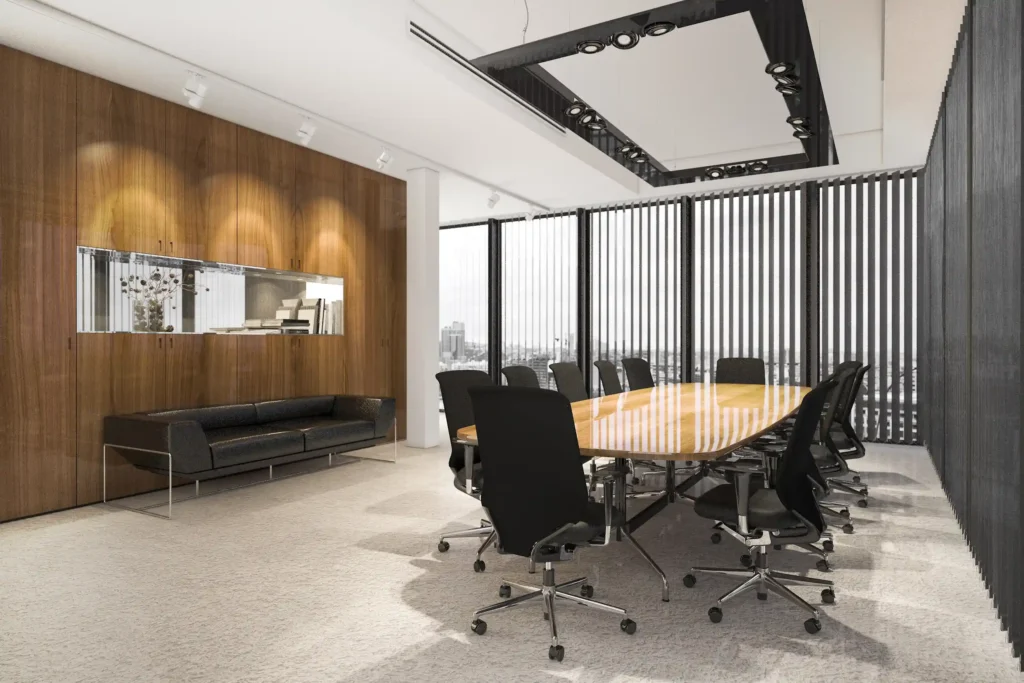
Furniture has a significant influence on how employees experience their working environment. Old chairs, damaged desks, and poorly arranged workstations can make an office feel outdated.
An office refresh before year end is a suitable time to evaluate whether existing furniture still meets the team’s requirements.
Consider investing in:
- Ergonomic office chairs with suitable back support.
- Desks with sufficient working surfaces.
- Adjustable furniture where appropriate.
- Cable management accessories.
- Storage cabinets and mobile drawers.
It is also worth checking whether employees have enough personal workspace. A workstation should accommodate essential equipment without becoming unnecessarily crowded.
Rather than replacing every item, businesses can retain furniture that remains functional and update the pieces that genuinely need attention.
3. Improve Office Lighting
Lighting is another important part of workplace design. A poorly lit office can feel uncomfortable, while uneven lighting may create glare on computer screens or make certain work areas less practical.
Start by assessing the existing lighting arrangement.
Useful improvements include:
- Making better use of natural daylight.
- Replacing outdated lighting fixtures.
- Adding task lighting where necessary.
- Choosing suitable colour temperatures for different work areas.
- Positioning workstations to minimise screen glare.
For example, meeting rooms may benefit from adjustable lighting, while workstations require consistent illumination for everyday tasks.
A balanced lighting plan can also improve the overall appearance of the interior by making colours, furniture, and finishes look more cohesive.
4. Refresh Walls, Colours, and Interior Finishes
Walls and interior finishes contribute significantly to the atmosphere of an office. Over time, paintwork may become dull, surfaces may show signs of wear, and the overall colour scheme may no longer reflect the company’s image.
Refreshing selected surfaces can make a noticeable difference.
Businesses can consider:
- Repainting walls in neutral or brand-aligned colours.
- Introducing an accent wall in reception areas.
- Updating outdated wall finishes.
- Using suitable materials for high-traffic areas.
- Coordinating furniture colours with the overall interior palette.
A professional office does not necessarily need an elaborate colour scheme. A consistent combination of colours, textures, and finishes can create a clean and well-designed environment.
When choosing materials, consider maintenance requirements and durability, especially in areas that experience frequent employee or visitor traffic.
5. Organise Storage and Reduce Workplace Clutter
A cluttered office can make daily tasks less convenient. Files, stationery, equipment, and unused furniture can gradually occupy valuable floor space.
Before the year ends, review what the office actually needs.
A simple storage improvement plan could include:
| Office Area | Common Issue | Recommended Improvement |
|---|---|---|
| Workstations | Too many personal items | Add drawer organisers |
| Meeting rooms | Unused equipment | Introduce concealed storage |
| Reception | Visible paperwork | Use organised cabinets |
| Shared areas | Excess furniture | Review furniture placement |
| Document storage | Disorganised files | Introduce labelled storage |
Businesses should also review unused furniture and equipment before deciding whether to retain, relocate, or replace them.
Custom-built cabinets and integrated storage can be useful when standard furniture does not fit the available space. The right solution depends on the office layout, storage requirements, and overall design concept.
6. Create More Comfortable Meeting and Breakout Areas
Meeting rooms and breakout spaces serve different purposes, but both contribute to the overall workplace experience.
A meeting room should support discussions, presentations, and collaboration. Meanwhile, a breakout area provides employees with a more relaxed setting for informal conversations or short breaks.
Consider refreshing these spaces with:
- Comfortable seating arrangements.
- Suitable meeting tables.
- Functional lighting.
- Convenient power outlets.
- Better acoustic considerations.
- Simple decorative elements.
For smaller offices, flexible furniture can help a single area serve multiple purposes.
For example, a shared space could function as an informal meeting area during quieter periods and provide additional seating when the office becomes busier.
7. Update Technology and Workplace Facilities
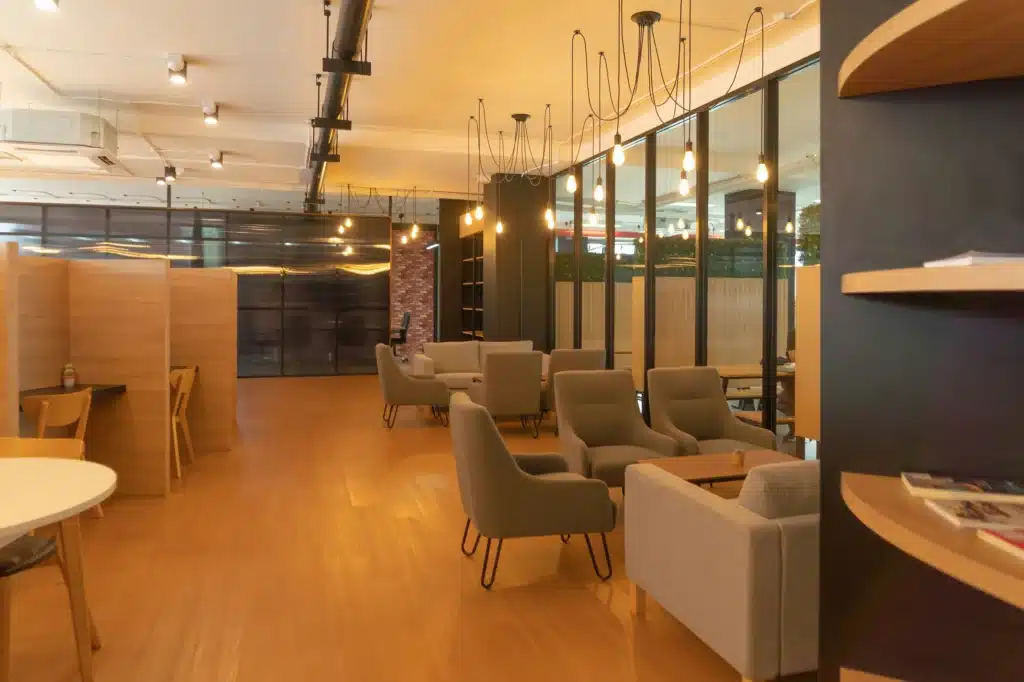
An office refresh should consider practical facilities alongside visual improvements.
Outdated equipment or poorly positioned power outlets can make daily operations less convenient. Reviewing these details before the new year can help businesses identify necessary upgrades.
Some areas worth checking include:
- Power outlets and cable management.
- Meeting room presentation equipment.
- Video conferencing facilities.
- Internet connectivity arrangements.
- Shared printing and scanning areas.
- Access to charging points.
It is important to consider both present requirements and potential future needs so that improvements remain useful as the business develops.
8. Introduce Interior Design Elements That Reflect Your Brand
An office interior should communicate something about the business. The reception area, meeting rooms, colour palette, furniture, and decorative details can all contribute to a consistent brand experience.
For example, a corporate office may benefit from a clean and understated interior, while a creative business might prefer more flexible spaces and distinctive design features.
Consider incorporating:
- Brand colours through selected interior finishes.
- Company signage in reception areas.
- Consistent furniture and material selections.
- Decorative elements that reflect the business identity.
- A professional and welcoming visitor experience.
The key is to create a cohesive environment rather than adding decorative features without considering the overall design.
Office Refresh Before Year End: A Simple Planning Checklist
Once the main improvement areas have been identified, businesses should organise the work into manageable stages.
The following checklist provides a practical starting point.
| Planning Stage | Key Activities | Expected Outcome |
|---|---|---|
| Initial assessment | Review furniture, layout, lighting, and facilities | Identify improvement needs |
| Budget planning | Set priorities and allocate resources | Establish a realistic budget |
| Design planning | Review layouts, colours, and materials | Create a consistent design direction |
| Work scheduling | Coordinate contractors and office operations | Reduce unnecessary disruption |
| Implementation | Complete approved improvements | Upgrade the workspace |
| Final inspection | Review finishes, furniture, and facilities | Prepare the office for use |
Businesses should also consider the timing of each improvement. If the office will remain operational during the refresh, work may need to be scheduled around employee availability and business activities.
Should You Choose an Office Refresh or a Complete Renovation?
Not every office needs a complete transformation. The right approach depends on the current condition of the workspace and the business’s long-term requirements.
| Consideration | Office Refresh | Complete Office Renovation |
|---|---|---|
| Main Purpose | Improve existing spaces | Transform the overall workspace |
| Scope | Selected upgrades | Extensive interior changes |
| Furniture | Rearrange or replace selected items | New furniture or integrated solutions |
| Layout | Minor adjustments | Major space planning |
| Finishes | Targeted updates | Extensive material upgrades |
| Disruption | Generally more limited | May require more coordination |
| Suitability | Offices that remain functional | Offices requiring substantial improvements |
An office refresh is suitable when the existing layout remains practical but certain elements need attention.
A complete renovation may be more appropriate when the office has outdated infrastructure, significant space-planning issues, or changing operational requirements.
A professional assessment can help determine which option offers the most practical long-term solution.
How Can an Interior Design Company Help With Your Office Refresh?
Working with an experienced interior design company can make the planning process more organised, particularly when improvements involve several areas of the office.
Professional designers can help assess the existing workspace, recommend suitable layouts, coordinate materials, and develop a design concept that reflects the company’s requirements.
At ARTrend Design, commercial interior design solutions are developed around the functional and visual needs of different business environments. The company’s experience covers a range of commercial settings, including offices, retail spaces, schools, banks, restaurants, hotels, and healthcare facilities.
Its approach includes understanding project requirements, analysing floor plans, developing design visualisations, and coordinating project execution.
Businesses considering a more comprehensive workplace improvement can explore ARTrend’s Commercial Interior Design services to learn more about its commercial design solutions.
The benefit of professional planning is that furniture, finishes, lighting, storage, and circulation can be considered together rather than treated as separate decisions.
Pro Tips: Make Your Year-End Office Refresh More Effective
Before starting your project, keep these practical tips in mind:
- Start with a workplace assessment: Identify problems before purchasing new furniture or materials.
- Prioritise functionality: Focus on improvements that make everyday activities easier.
- Set a realistic budget: Allocate spending according to business needs and project priorities.
- Think about future growth: Consider whether the layout can accommodate additional employees or equipment.
- Choose durable materials: Select finishes that suit the level of daily office use.
- Coordinate the project schedule: Plan work around important business activities and employee availability.
- Maintain design consistency: Ensure that furniture, colours, lighting, and finishes complement one another.
A successful office refresh is not about making the workplace look completely different. It is about making thoughtful improvements that support the people who use the space every day.
Conclusion: Start Your Office Refresh Before Year End With ARTrend Design
Planning an office refresh before year end gives businesses an opportunity to improve workplace functionality, update outdated interiors, organise storage, and create a more welcoming environment for employees and visitors. From upgrading workstations and improving lighting to redesigning meeting areas and incorporating brand elements, even targeted improvements can make an existing office more practical and visually appealing.
If you are planning to upgrade your commercial workspace in Singapore, ARTrend Design can help you explore interior design solutions that balance aesthetics, functionality, and business identity. With experience in commercial interior design and project execution, ARTrend aims to create environments that reflect each client’s needs.
Visit ARTrend Design to explore its commercial interior design portfolio and discover how professional workspace planning can help prepare your office for the year ahead.
FAQs (Frequently Asked Questions)
What is an office refresh?
An office refresh involves updating furniture, lighting, layouts, storage, and interior finishes to improve workplace functionality and appearance.
When should businesses plan an office refresh?
Year-end is a suitable time to review office conditions and complete improvements before the new business year begins.
How much does an office refresh cost in Singapore?
Costs depend on office size, furniture, materials, design requirements, and the amount of renovation work involved.
What improvements should be included in an office refresh?
Common improvements include ergonomic furniture, better lighting, organised storage, updated wall finishes, and redesigned meeting areas.
Should I hire an interior designer for an office refresh?
Yes. An experienced interior designer can help plan layouts, select materials, coordinate improvements, and create a functional workspace that reflects your business identity.